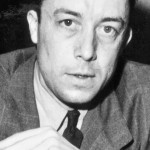
Biography (based on the Encyclopedia of the Third Reich – www.fact400.ru/mif/reich/titul.htm ) www.fact400.ru/mif/reich/titul.htm) Albert Speer was born March 15, 1905 in Mannheim. He studied architecture and was an assistant at the Berlin Technical Institute. In 1931 he joined the Nazi Party, and in 1932 – the SS. As a member of several minor architectural commissions for the construction of the headquarters of Gauleiter of Berlin, then Albert Speer was commissioned logistics giant party congress in Tempelhof May 1, 1933. Masterful use of A. Speer quickly constructed flagpoles and unusual lighting effects gave the Nazi mass gatherings special pompous style. In 1934 he was assigned to draft a resettlement site for party congresses at Nuremberg. The successes of Albert Speer, who was not yet thirty, attracted the attention of Hitler. Following the attention showered positions and orders. Fuhrer, himself a frustrated architect, saw in Speyer incarnation of their own youthful dreams. He has surrounded himself with capable architect, Albert Speer appointed as Head of the German Labor Front and brought to the headquarters of his deputy. In 1937, A. Speer was the Chief Inspector of the Reich in architecture, having been instructed “to make Berlin once again present and the true capital of the German Reich.”Embodying the grandiose plans of Hitler, Speer worked tirelessly: designed public institutions, stadiums, palaces, monuments and entire sverhgoroda for the future Greater Germany. Albert Speer openly expressed admiration for the ideas of his patron, that other architects were called”insane sentimentality”fit for the last century. Failed student of the Academy of Arts, Hitler stood for hours chained to the sketches and layouts Speer. In 1938, he presented him with the Golden party badge. Albert Speer continued his work, and after the start of the 2nd World War. In 1941 he was elected to the Reichstag. The following year he was appointed to an important post in the Ministry of weapons and military industry instead died in a plane crash Fritz Todt. From that moment Albert Speer fully switched from architecture to the military industry. He has also held many other important positions: member of the Central Planning Commission, the Inspector General of Water and Power, the director of the organization Todt, head of the National Socialist body and head of the main drivers of technological control of the party. For a time he was considered the second most important man in the Third Reich and the absolute dictator of the German war industry. A. Speer achieved extraordinary operating results, in spite of opposition from the other Nazi leaders, and despite heavy losses from Allied bombing. Speer was indirectly aware of the planned attempt on Hitler, but has never been closely associated with the July 1944 conspiracy in the last weeks of the war, he had resisted the orders of Hitler’s policy of”scorched earth”to wreak havoc and destruction, but only because the German people turned unworthy of the genius of his Fuhrer. Appearing before the International Military Tribunal at Nuremberg in 1946, Albert Speer was the only one of the accused admitted his guilt for the crimes of the Third Reich.”This court is required, – he said. – In an authoritarian system of such heinous crimes all have a shared responsibility.”Curious his confession:”I think that if Hitler could ever be a friend, that friend would be me.” In his testimony, Albert Speer claimed that his work was”technologically and economically,”not political, that he was only an architect, and all that he knew about what was happening, that’s what he could read in the newspapers. A. Speer admitted that rejected not because of the cruelty of humanity, and from a practical point of view as excessive cruelty would be an obstacle in its efforts to increase production. The Tribunal was limited by the fact that acknowledged”complicity”Speer’s program of using forced labor,”as mitigating circumstances, it should be recognized that. In the final stages of the war he was one of the few who had the courage to tell Hitler that the war was lost and must be done steps to prevent the wanton destruction of industrial enterprises”. Speer was convicted under item 3 (war crimes) and paragraph 4 (crimes against humanity). 1 October 1, 1946 he was sentenced to 20 years’ imprisonment in Spandau Prison in Berlin. He was released in 1966. In 1970, Albert Speer published his book”Inside the Third Reich,” which received worldwide fame. The first sketches Speer made while still in Spandau, secretly taking out a piece, and then the collected material in the book. This book is recognized the most outstanding political memoirs of all time. The book shows how Hitler unlimited power could be combined with the new mechanism provided by modern technology. CC Albert Speer writes that the Third Reich was in fact very far from monolithic totalitarian state, and was only a fragmented feudal principality controlled by local politicians such as the cynical propaganda minister Dr. Goebbels, Himmler CC colorless chief and head of the Luftwaffe Goering. Each defend their own personal interests and strive for their own benefit, without worrying about what kind of price war given. Speer insisted that he personally was not involved in the horrors that have contributed to its work. He admitted that signed a contract with the devil, and realized too late the meaning of his contract. Great architect and organizer of Albert Speer died in a London hospital in 1981.


Albert Speer
on Sep 23, 2015